
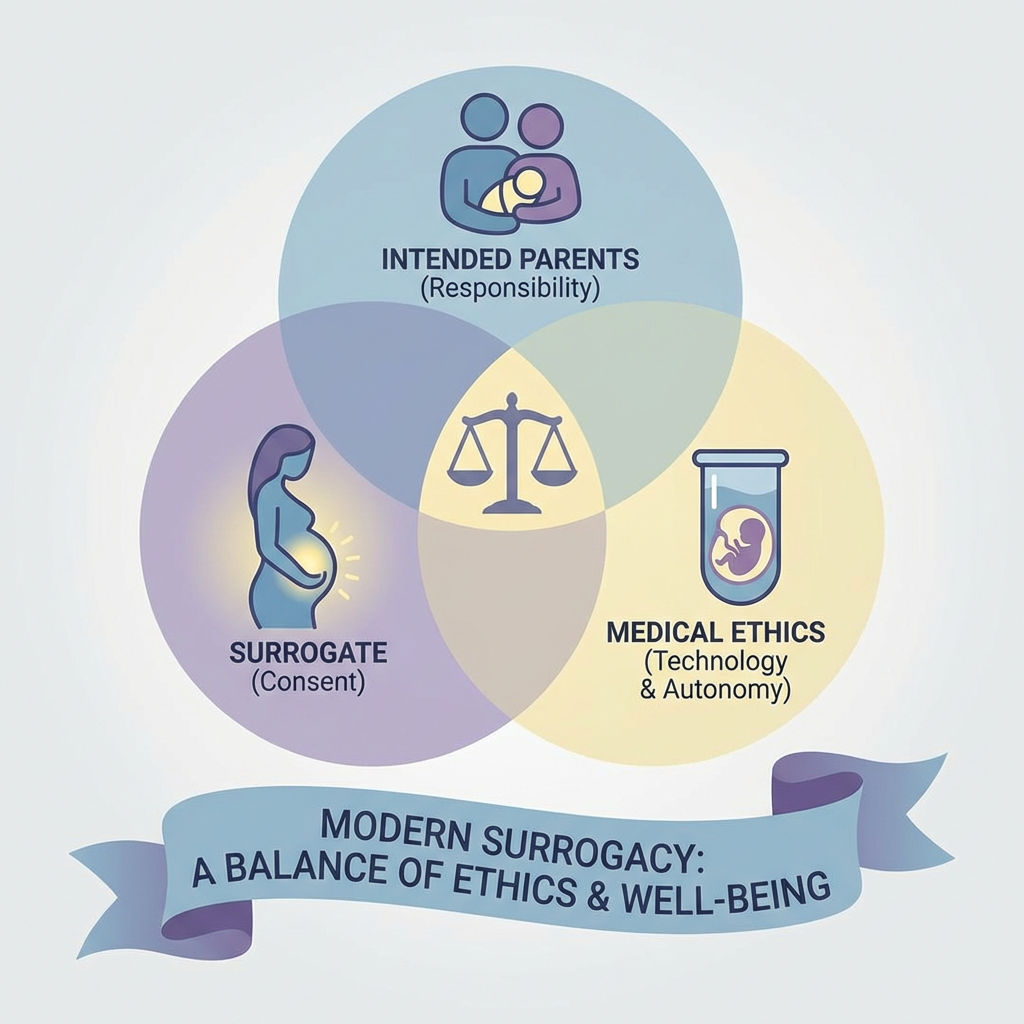
Surrogacy continues to evolve alongside advances in reproductive medicine and global mobility. As the practice expands, ethical considerations remain central to responsible surrogacy arrangements.
A fundamental ethical principle is informed consent. All participants—including intended parents, surrogates, and donors—should receive clear information about medical procedures, potential risks, legal implications, and emotional expectations before entering any agreement.
Respect for the surrogate’s autonomy is equally important. Surrogates should have access to independent legal advice, comprehensive medical care, and the freedom to make informed decisions about their health and wellbeing throughout pregnancy.
Transparency and fairness in financial arrangements also contribute to ethical practice. Whether surrogacy is altruistic or compensated, agreements should ensure that surrogates are not exposed to financial exploitation or undue pressure.
The welfare of the child is another central consideration. Responsible surrogacy programs emphasize stable legal parentage, supportive family environments, and careful planning for the child’s future.
Finally, ethical surrogacy requires professional oversight. Clinics, agencies, and legal professionals play a role in maintaining standards that protect all parties involved.
By prioritizing transparency, respect, and responsible regulation, modern surrogacy can continue to provide a meaningful pathway to parenthood while upholding the dignity and wellbeing of everyone involved.
Leave a Reply